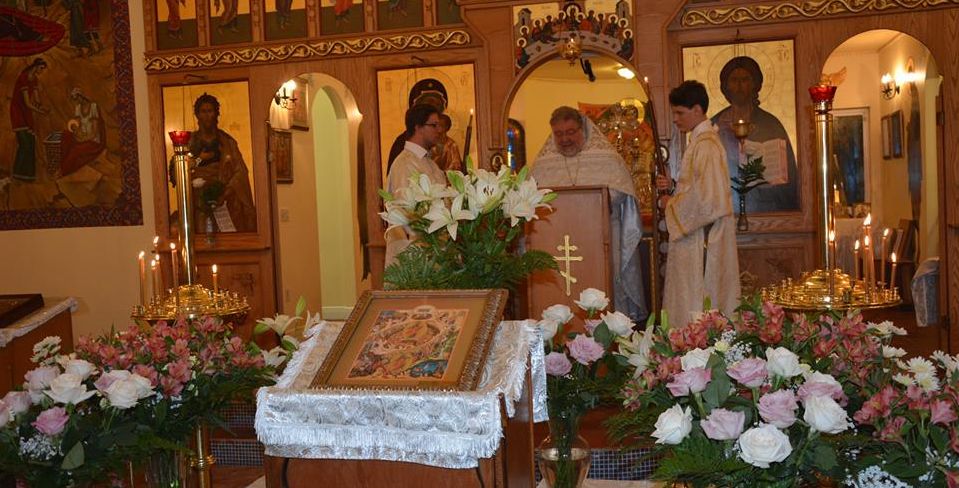
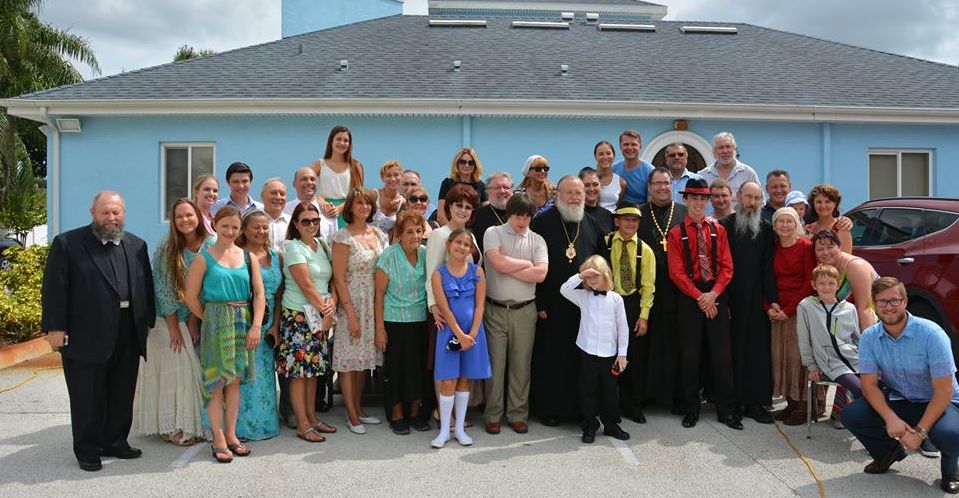
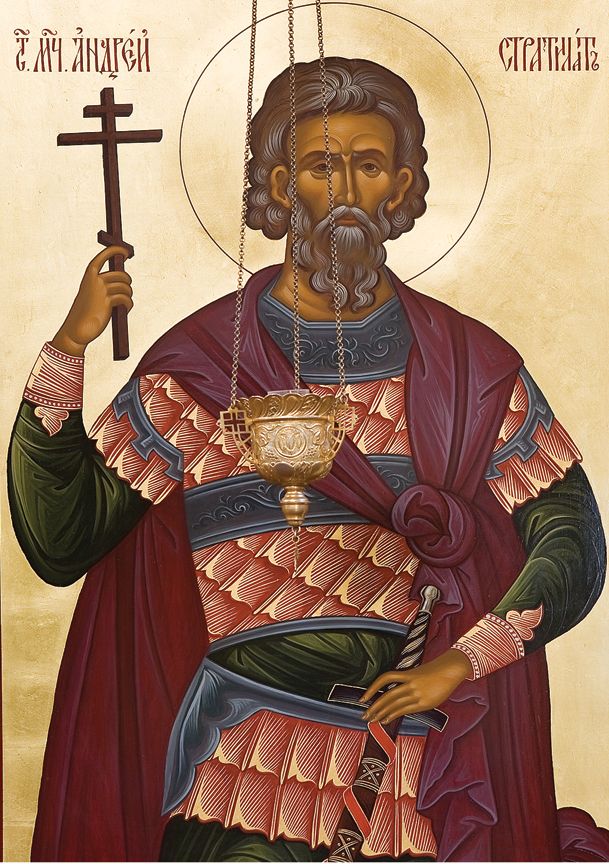

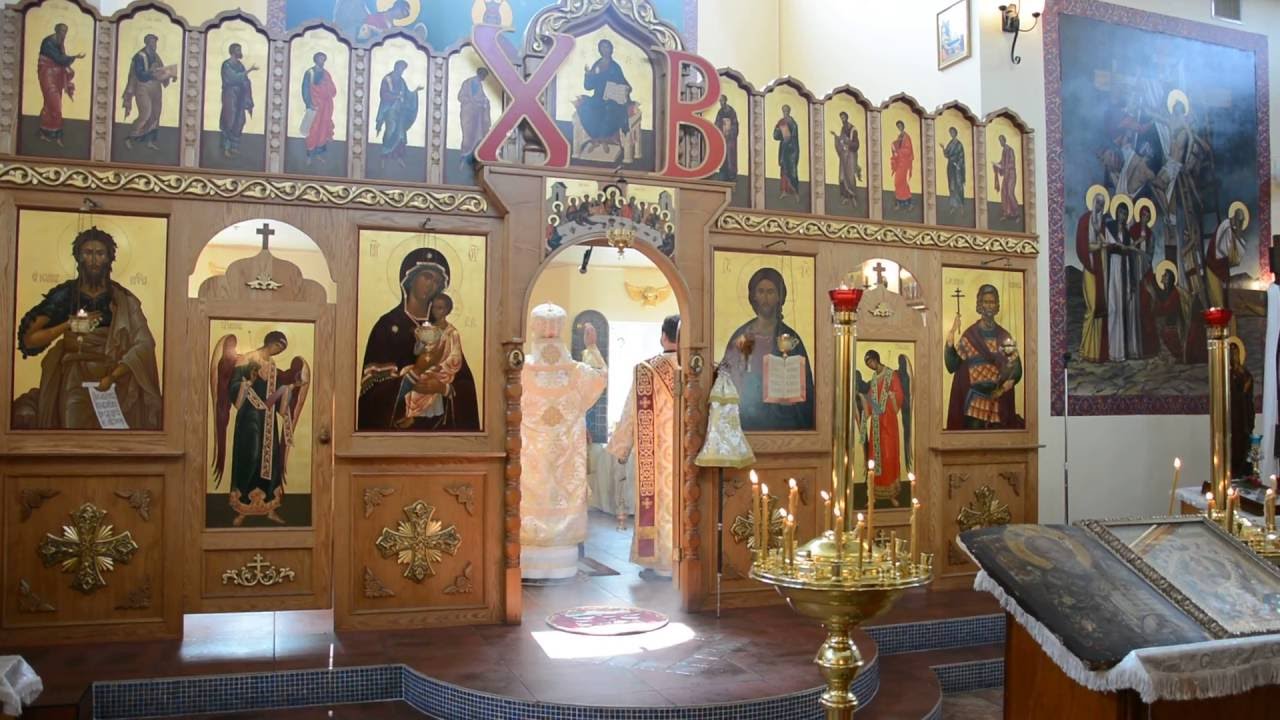

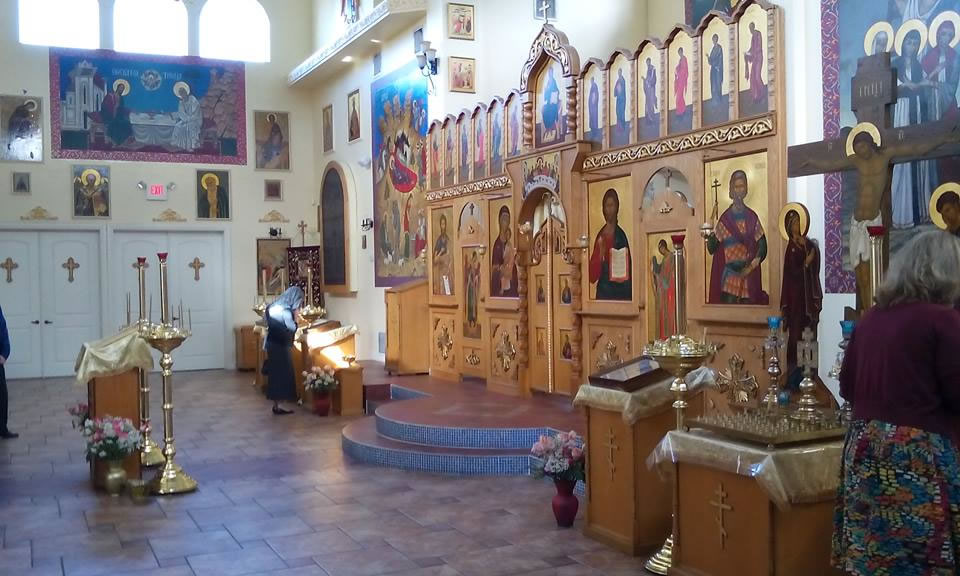
Welcome to St. Andrew Stratelates Orthodox Cathedral!
Ставропигиальный собор святого мученика Андрея Стратилата
6465 54th Ave. N., St. Petersburg, FL 33709
Phones: 703-628-2800 (EN), 727-342-9628 (RU/EN)
Дорогие посетители нашего сайта!
Вы находитесь на веб-странице прихода св. муч. Андрея Стратилата Русской Православной Церкви За Границей. Мы приветствуем вас и рады предоставить вашему вниманию информацию о нашем приходе и приходской жизни. Также мы с благодарностью примем замечания о сайте, его содержании и организации. Да поможет нам всем Господь в деле сохранения и распространения русского православия во Флориде.
Настоятель - протоиерей Игорь Шитиков,
члены церковного приходского совета
ГОДОВОЕ ПРИХОДСКОЕ СОБРАНИЕ
В воскресенье, 22 февраля 2026 года, после литургии состоится годовое Приходское Собрание со следующей повесткой:
- Молитва. Открытие собрания. Выборы ведущего, секретаря, и счетчиков.
- Информация настоятеля прихода.
- Отчёт казначея прихода за 2025 год.
- Доклад председателя ревизионной комиссии.
- Утверждение бюджета на 2026 год.
- Информация куратора сестричества.
- Информация регента хора.
- Выборы:
a) Старосты, б) Казначея, в) Секретаря, г) Членов Приходского Совета, д) Членов Pевизионной Kомиссии.
- Молитва и закрытие собрания.
Некоторые выписки из Нормального Приходского Устава (НПУ):
- № 11. Членами прихода могут быть все лица Православного вероисповедания обоего пола, достигшие 21-летнего возраста, платящие установленные членские взносы,исповедающиеся и причащающиеся Св. Таин не менее одного раза в год и ревнующие о нравственном и материальном благополучии прихода.
Примечание 2. Члены прихода, состоящие в сожителестве без церковного брака, не могут участвовать в Приходском Собрании или быть избираемы на приходскую должность. - № 13. Все члены прихода, за исключением указанных в примеч. 2 к № 11, исправно платящие членские взносы и уплачивающие другие обязательные взносы устанавливаемые Епархиальными Собраниями, имеют право участвовать с решающим голосом во всех приходских собраниях, избирать должностных лиц прихода и быть избираемыми на приходские должности.
Примечание 2. Члены прихода, не уплачившие членского взноса в течении 3-х месяцев, лишаются права голоса и права быть избранными на приходские должности впредь до уплаты ими такового взноса. Члены прихода не уплативши членского взноса в течении 12 месяцев, исключаются из списка членов прихода или, если кто-либо из членов прихода не внес причитающегося с него членского взноса по уважительным причинам (болезнь, безработица и т.п.), вопрос о его праве голоса решается Церковно- Приходским Советом. - № 21. Годовое Приходское Собрание считается законно состоившимся при наличии на нем двух третей членов прихода.
Примечание 1. Если к назначенному для Собрания часу прибывшие члены прихода не составят требуемого кворума, назначается на тот же день, одним часом позже, другое Годовое Приходское Собрание, которое считается правомочным при любом количестве собравшихся членов. Об этом должно быть оговорено в повестке о созыве Годового Приходского Собрания.
ANNUAL PARISH MEETING
On Sunday, February 22, 2026, following the Divine Liturgy, the Annual Parish Meeting will be held with the following agenda:
- Prayer. Opening of the meeting. Election of the chairperson, secretary, and vote counters.
- Report of the Rector of the Parish.
- Report of the Parish Treasurer for the year 2025.
- Report of the Chairman of the Audit Commission.
- Approval of the Parish Budget for the year 2026.
- Report of the Sisterhood Coordinator.
- Report of the Choir Director.
- Elections:
a) Parish Warden, b) Treasurer, c) Secretary, d) Members of the Parish Council, e) Members of the Audit Commission. - Prayer and closing of the meeting.
Selected excerpts from the Standard Parish Statute (SPS):
-
§ 11.
Members of the parish may be persons of the Orthodox faith, of either sex, who have attained the age of twenty-one (21) years, who duly pay the established membership dues, who confess and partake of the Holy Mysteries at least once a year, and who zealously care for the moral and material well-being of the parish.
Note 2. Parish members who are living together without a Church marriage are not permitted to participate in the Parish Meeting nor to be elected to parish office. -
§ 13.
All parish members, with the exception of those mentioned in Note 2 to § 11, who duly pay membership dues and other mandatory contributions as established by Diocesan Assemblies, have the right to participate with a deciding vote in all parish meetings, to elect parish officers, and to be elected to parish offices.
Note 2. Parish members who have failed to pay membership dues for a period of three (3) months shall be deprived of the right to vote and the right to be elected to parish offices until such dues are paid. Those who have failed to pay dues for a period of twelve (12) months shall be removed from the list of parish members. In cases of valid reasons (illness, unemployment, etc.), the question of voting rights shall be decided by the Parish Council. -
§ 21.
The Annual Parish Meeting shall be considered duly constituted if two-thirds of the parish members are present.
Note 1. If, by the appointed time, the required quorum is not present, another Annual Parish Meeting shall be convened on the same day, one hour later, and shall be considered valid regardless of the number of members present. This must be stated in the notice convening the Annual Parish Meeting.
Тропарь воскресный, глас 1
Ка́мени запеча́тану от иуде́й/ и во́ином стрегу́щим Пречи́стое Те́ло Твое́,/ воскре́сл еси́ тридне́вный, Спа́се,/ да́руяй ми́рови жи́знь./ Сего́ ра́ди си́лы небе́сныя вопия́ху Ти́, Жизнода́вче:/ сла́ва воскресе́нию Твоему́, Христе́,/ сла́ва Ца́рствию Твоему́,// сла́ва смотре́нию Твоему́, еди́не Человеколю́бче.
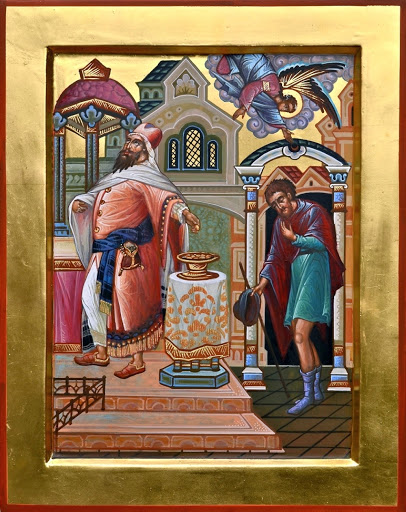
Кондак Недели о мытаре и фарисее, глас 4
Фарисе́ева убежи́м высокоглаго́лания,/ и мытаре́ве научи́мся высоте́ глаго́л смире́нных,/ покая́нием взыва́юще:/ Спа́се ми́ра,// очи́сти рабы́ Твоя́.
Troparion of the Resurrection, Tone 1
When the stone had been sealed by the Jews,/ And the soldiers were guarding Thine immaculate Body,/ Thou didst arise on the third day, O Savior,/ granting life unto the world./ Wherefore, the Hosts of the Heavens cried out to Thee, O Life-giver:/ Glory to Thy Resurrection, O Christ./ Glory to Thy kingdom.// Glory to Thy dispensation, O only Lover of mankind.
Kontakion of Sunday of the Publican and the Pharisee, Tone 4
Let us avoid the proud speaking of the Pharisee/ and learn humility from the groans of the Publican,/ and let us cry in penitence:/ O Saviour of the world,// be merciful to Thy servants.
Неделя о мытаре и фарисее (34-я)
[2 Тим. 3, 10-15; Лк. 18, 10-14] Вчера учило нас Евангелие неотступности в молитве, а ныне учит смирению или чувству бесправности на услышание. Не присваивай себе права на услышание, но приступай к молитве, как никакого внимания недостойный, и дающий себе дерзновение отверзть уста и вознести молитву к Богу по одному безпредельному к нам бедным снисхождению Господа. И на мысль да не приходит тебе: я то и то сделал; подай же мне то-то. Все, что бы ты ни делал, почитай должным; ты должен был все то сделать. Если бы не сделал, подвергся бы наказанию, а что сделал, тут не за что награждать, ничего особенного не явил ты. Вон фарисей перечислил свои права на услышание, и вышел из церкви ни с чем. Худо не то, что он так делал, как говорил; так и следовало ему поступать, а худо то, что он выставил то, как особенное нечто, тогда как сделавши то и думать о том не следовало. - Избави нас, Господи, от этого фарисейского греха! Словами редко кто так говорит, но в чувстве сердца редко кто не бывает таким. Ибо отчего плохо молятся? Оттого, что чувствуют себя и без того в порядке находящимся перед Богом.
Sunday of the Publican and the Pharisee (34th)
[II Tim. 3:10–15; Luke 18:10–14] Yesterday the Gospel reading taught us persistence in prayer, and now it teaches humility, or a feeling of having no right to be heard. Do not assume that you have the right to be heard, but approach prayer as one unworthy of any attention, allowing yourself only the boldness needed to open your mouth and raise up your prayer to God, knowing the Lord’s boundless condescension toward us poor ones. Do not even allow the thought to come to your mind, “I did such and such — so give me such and such.” Consider whatever you might have done as your obligation. If you had not done it you would have been subject to punishment, and what you did is actually nothing deserving reward; you did not do anything special. That Pharisee enumerated his rights to be heard, and left the church with nothing. The harm is not that he had actually done as he said, for indeed he should have done it. The harm is that he presented it as something special; whereas, having done it he should have thought no more of it. Deliver us, O Lord, from this sin of the Pharisee! One rarely speaks as the Pharisee in words, but in the feelings of the heart, one is rarely unlike him. For why is it that people pray badly? It is because they feel as though they are just fine in the sight of God, even without praying.
6465 54th Ave N., St.Petersburg, FL, 33709
Phone (Russian, English): 727-342-9628 Phone (English): 703-628-2800